Running costs
Cost per use: what a pan really costs you
Divide the price by the times you will cook on it. A $40 nonstick pan replaced every three years costs $280 over twenty years; a $25 cast iron pan costs $25.
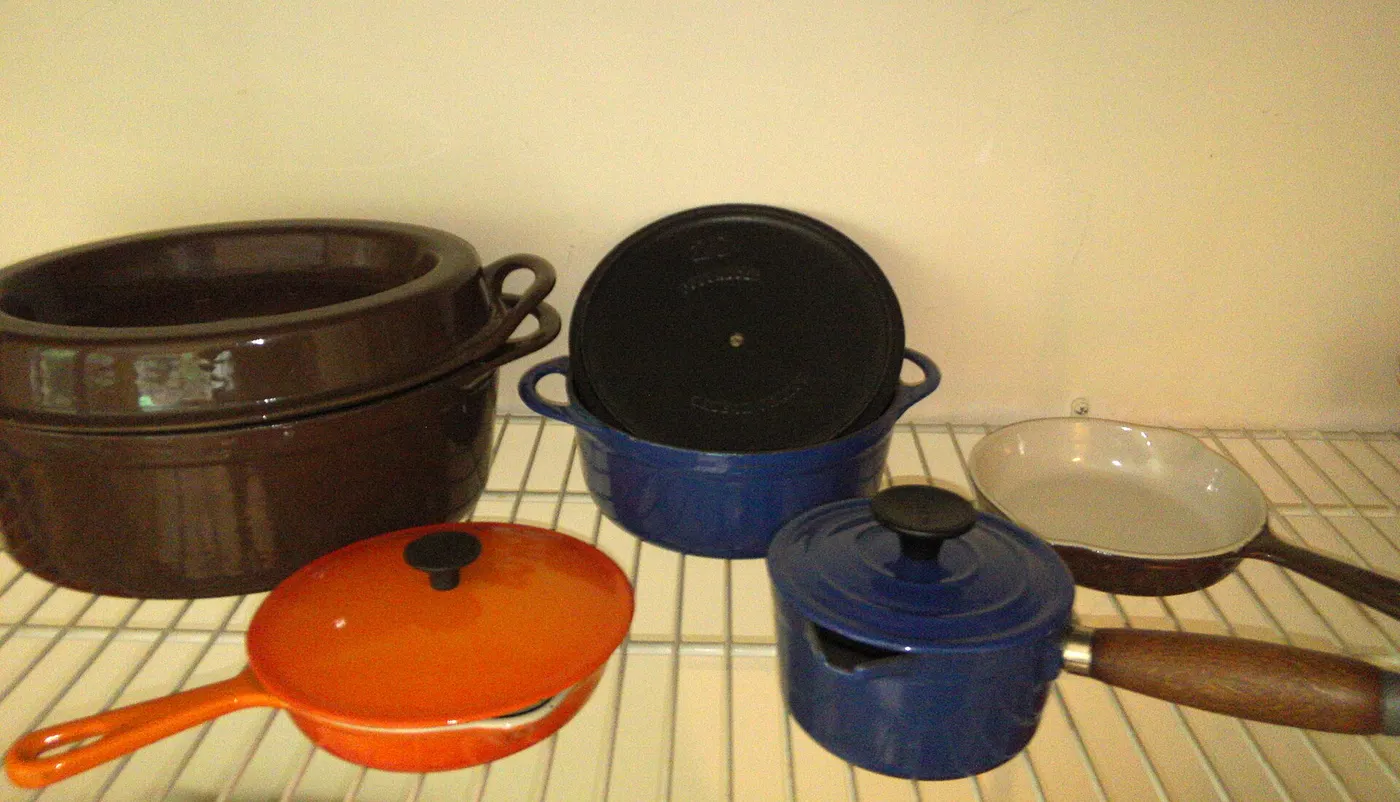
Cookware is one of the few purchases where the cheapest item on the shelf is reliably the most expensive thing in the kitchen, and the reason is arithmetic rather than quality. A pan's cost is its price divided by the number of times you cook on it, and a coating that lasts 3 years divides by a much smaller number than a casting that lasts 30.
This guide does the division for five pans, adds the electricity, and then adds the part nobody counts, which is what you buy to look after them. Every price below is an example used to make the arithmetic legible, not a quote; nothing on this site is a live price, and sales tax is set by state and locality rather than nationally, so it is excluded throughout.
The division, with the replacement cycle in it
Four uses a week is 208 uses a year, and 20 years of that is 4,160 uses. A $25 bare cast iron skillet that lasts the whole 20 years is 25 divided by 4,160, which is about 0.6 cents a use. A $110 clad stainless skillet over the same period is about 2.6 cents.
A nonstick pan divides by a different number. Replaced every 3 years it covers 624 uses, so a $40 pan is about 6.4 cents a use, roughly ten times the cast iron figure. Over 20 years you buy seven of them, which is $280 against the cast iron pan's $25.
None of that makes nonstick a bad purchase. It makes it a consumable, and consumables belong in an annual budget rather than in a capital one. The sensible shape for most kitchens is a long-life pan for the heat work and an inexpensive coated pan replaced on a schedule for the release work, with the second one costed at about $14 a year rather than treated as a one-off.
| Pan | Example price | Years before replacement | Uses in that time | Cost per use |
|---|---|---|---|---|
| Bare cast iron skillet | $25 | 20 years | 4,160 | $0.006 |
| Clad stainless skillet | $110 | 20 years | 4,160 | $0.026 |
| Nonstick skillet | $40 | 3 years | 624 | $0.064 |
| Carbon steel skillet | $45 | 20 years | 4,160 | $0.011 |
| Enamelled Dutch oven, used once a week | $160 | 20 years | 1,040 | $0.154 |
Each cell is the price divided by the uses. The Dutch oven row uses 52 uses a year rather than 208, which is why its per-use figure is the highest despite a 20 year life.
Twenty years of the same job, priced three ways
Reading the table down a column hides the point, so here it is across. Over 20 years at 4 uses a week, the cast iron skillet costs $25 in total. The clad stainless costs $110. The nonstick costs $280, because you buy the first one plus six replacements.
That gap is larger than almost any quality difference between individual pans, and it is entirely created by the replacement interval. Stretching a nonstick pan from 3 years to 5 by keeping it off high heat and away from metal utensils takes the 20 year total from $280 to $160, which is a bigger saving than buying a cheaper coated pan ever produces.
The same logic applies to sets. A seven-piece set at $300 that contains two coated pans has two consumables inside a capital purchase, and when they wear out the set is broken and the pieces are rarely sold separately. Buying pieces individually keeps the consumable and the capital items on separate schedules.
| Pan | Pans bought in 20 years | Total spent | Cost per year |
|---|---|---|---|
| Bare cast iron, $25 | 1 | $25 | $1.25 |
| Clad stainless, $110 | 1 | $110 | $5.50 |
| Nonstick, $40, replaced every 3 years | 7 | $280 | $14.00 |
| Nonstick, $40, stretched to every 5 years | 4 | $160 | $8.00 |
Seven pans covers 21 years at a 3 year interval and four covers 20 at a 5 year interval. Each total divides by 20 for the annual figure.
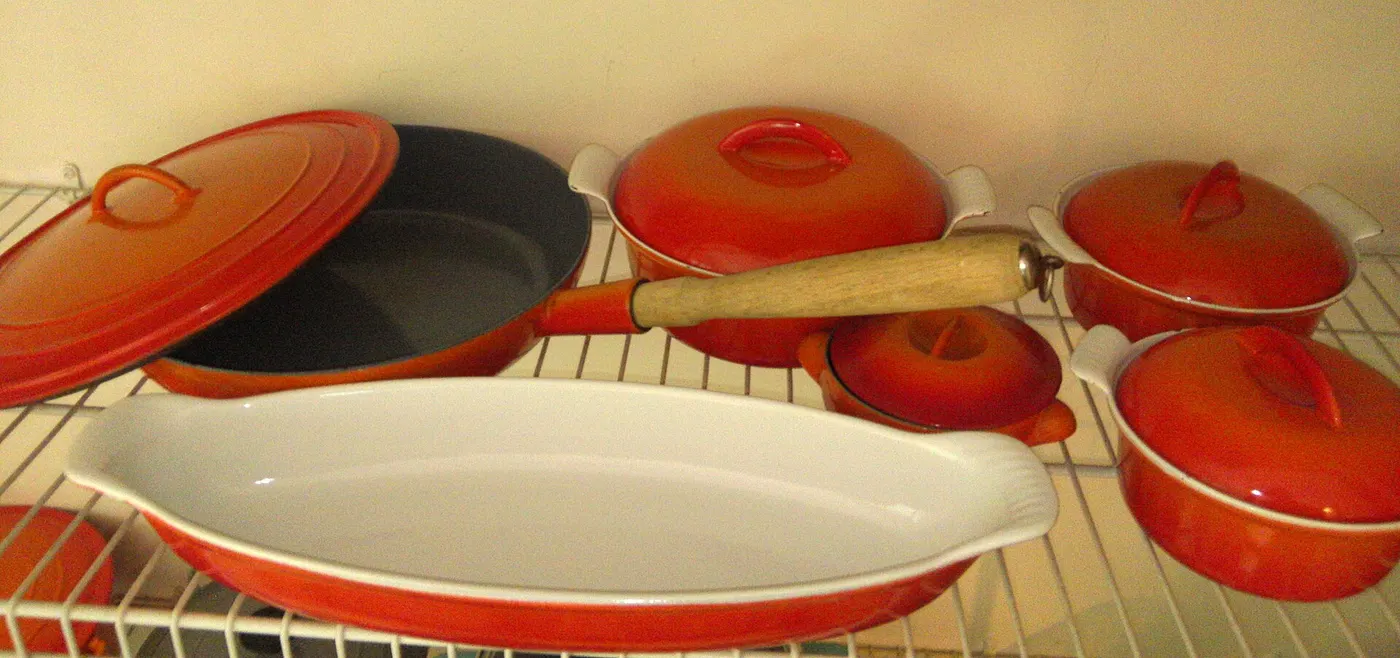
Electricity is a rounding error, and here is the size of it
The Energy Information Administration's Electric Power Monthly puts the average retail price of electricity to US residential customers at 18.16 cents per kilowatt-hour for August 2026, and every figure below uses that rate. Your own bill is a better number, because residential rates differ substantially by state and by plan.
Bringing a 4 lb cast iron skillet up to searing temperature takes roughly 0.05 kWh on an electric element once losses are included. Do that 208 times a year and it is about 10 kWh, or about $1.82. A seasoning session in the oven at 450°F for 1 hour is near 1.5 kWh, about 27 cents, and two of those a year is about 54 cents.
Put next to the $14.00 a year the replaced nonstick pan costs, the entire energy line for a heavily used cast iron skillet is under $2.50. There is no efficiency label to compare pans on either, because ENERGY STAR has no cookware category, which is why this has to be computed from mass and heating time rather than read off a sticker.
| Task | Energy | Cost |
|---|---|---|
| Preheating a 4 lb skillet, 208 times a year | 10 kWh a year | about $1.82 |
| One oven seasoning at 450°F for 1 hour | 1.5 kWh | about $0.27 |
| Two seasonings a year | 3 kWh | about $0.54 |
| Everything above, one year | 13 kWh | about $2.36 |
These are arithmetic from rated element power and the specific heat of iron, not measurements taken with a meter. A plug-in meter on your own hob will give a better number.
The consumables nobody budgets
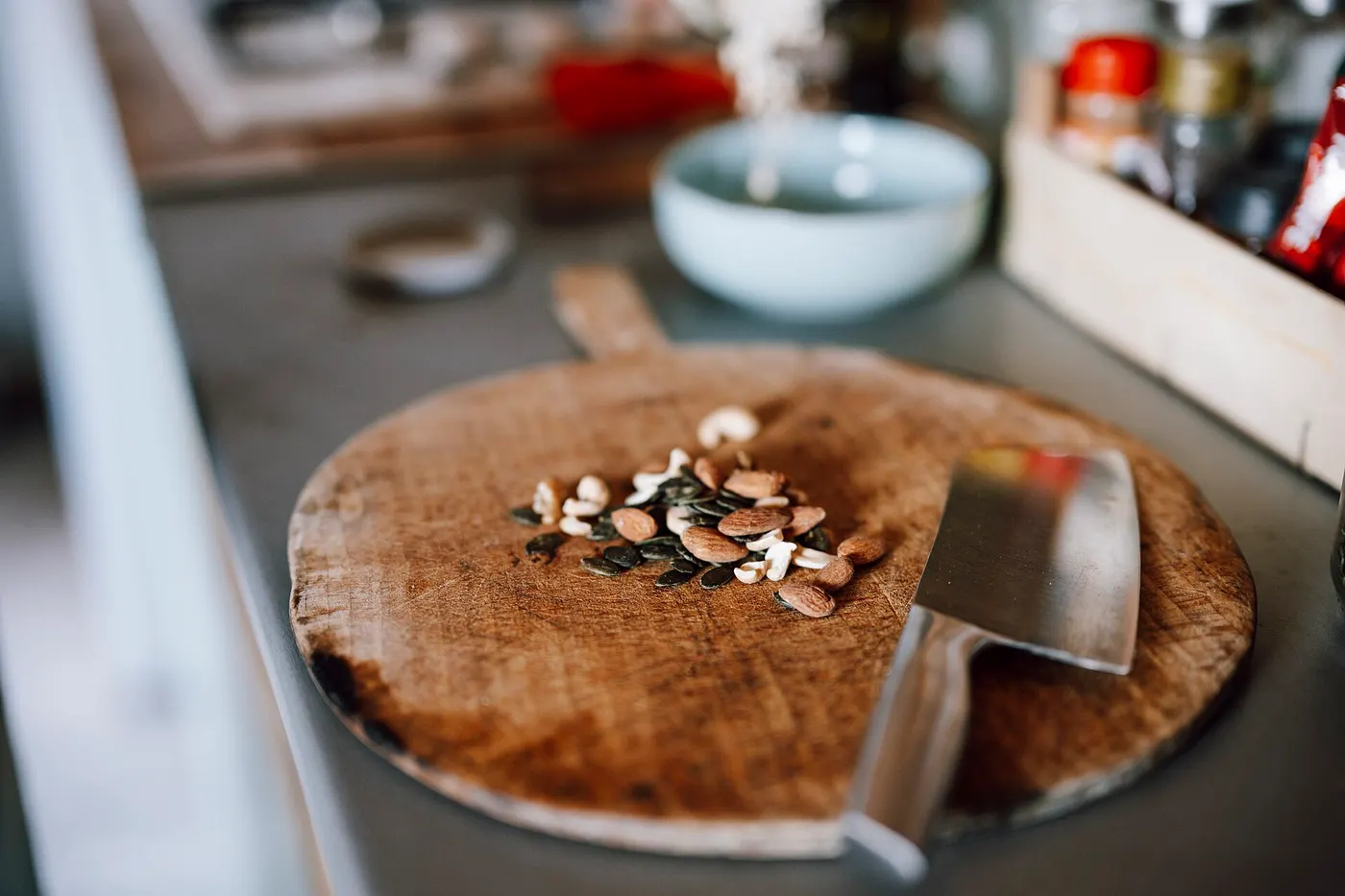
Looking after pans costs money too, and it is small enough to be invisible and regular enough to matter. A bottle of seasoning oil at $9 lasting a year, a chainmail scrubber at $12 lasting 5 years, and a wooden or silicone utensil set at $18 lasting 5 years comes to about $15 a year between them.
That $15 a year is more than the cast iron skillet costs per year and more than the clad stainless does. Which is to say: once you own long-life pans, the recurring cost of the kitchen is the maintenance, not the equipment, and the cheapest way to lower it is to own fewer, better-matched pans rather than to buy cheaper care products.
A full year of a two-pan kitchen on these example figures is therefore about $1.25 of cast iron, $14.00 of replaced nonstick, $2.36 of electricity and $15 of consumables, which is roughly $33 a year. The cost-per-use calculator on this site takes your own prices and your own replacement interval so you can see which of those four lines is actually yours.
Before you buy
- Write down how many times a week you would actually use the pan
- Multiply that by 52 and by the years you expect it to last
- Divide the price by that number before comparing any two pans
- Price the replacement interval separately for anything with a coating
- Add a yearly line for oil, scrubbers and utensils rather than ignoring it
- Read your own electricity rate off your bill instead of using the national average
- Check whether individual pieces of a set are sold separately before buying the set
Questions readers ask
- Is a cheap nonstick pan a false economy?
- Only if you treat it as capital. At $40 every 3 years it costs about $14.00 a year, which is a reasonable price for a job the other materials do not do without technique. It becomes a false economy when it is bought instead of a long-life pan rather than alongside one, because then the replacement cycle covers all your cooking rather than the eggs.
- How do I make a nonstick pan last longer?
- Keep it off high heat, use wood or silicone rather than metal, and hand-wash it. Stretching the interval from 3 years to 5 takes the 20 year total from $280 to $160, which is the single largest saving available in this entire guide and costs nothing to implement.
- Does the energy cost of preheating cast iron matter?
- Not at this scale. Preheating a 4 lb skillet 208 times a year is about 10 kWh, or about $1.82 at 18.16 cents per kWh. That is less than a seventh of what one replaced nonstick pan costs per year, so heat-up energy is not a reason to choose one material over another.
- Should I count a pan I inherited as free?
- Count it at zero purchase price and keep the maintenance line, which is where its real cost sits. An old cast iron pan that needs stripping and three seasoning cycles costs about 82 cents of oven time plus the oil, and then it joins the $25 column at a purchase price of nothing.
Sources
- U.S. Energy Information Administration — Electric Power Monthly, Table 5.3, average retail price of electricity to residential customers — checked 2026-11-03
- ENERGY STAR — certified product categories (confirms there is no cookware category and therefore no efficiency label) — checked 2026-11-03
- Lodge Cast Iron — How to Season (oven temperature and bake time used in the energy arithmetic) — checked 2026-11-03
Some links on this site can earn us a commission. That does not change which product a guide recommends, and it adds nothing to your price. Advertising is not enabled on this site yet. When it is, ads will be labelled and kept visually separate from the guides.